
The Ugly Car Color Lesson: Why Your Customers Don’t Think Like You Do
I’ll admit it.
Every once in a while, I see a car on the road and think, “That is one of the ugliest colors I’ve ever seen.”
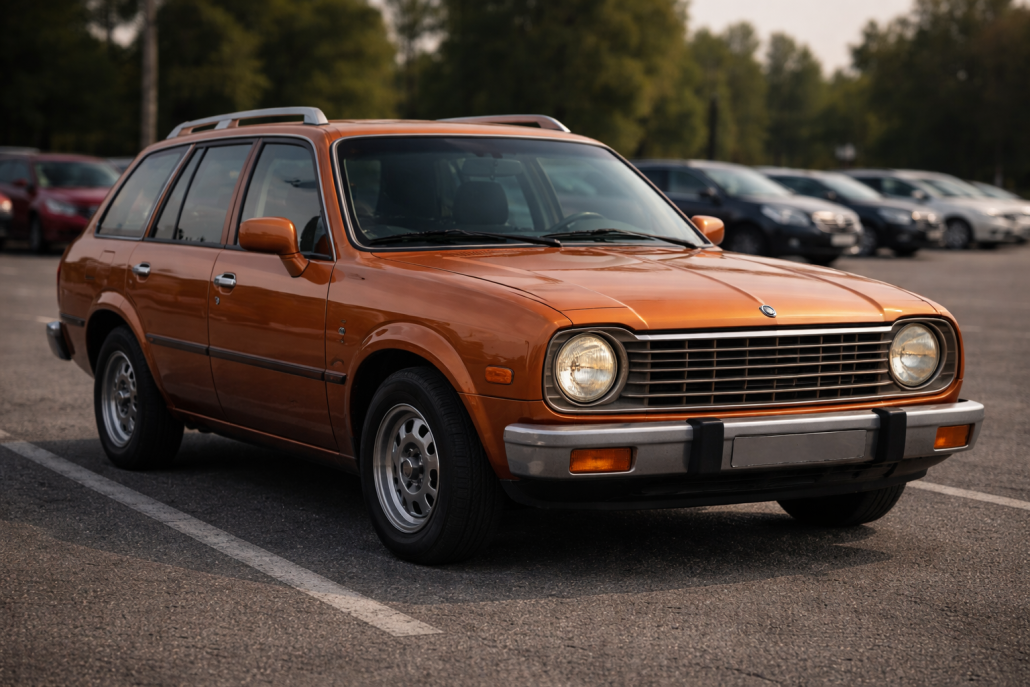
Not just mildly unattractive. I’m talking about that strange burnt orange. That muddy brown that somehow looks both metallic and dirty at the same time. That green that feels like it belongs on a 1970s kitchen appliance, not a modern vehicle.
And every time I see one, I have the same thought:
“Why would a dealership even offer that color?”
Then it hits me.
Because someone bought it.
The Dangerous Assumption Most Businesses Make
There’s a quiet assumption that creeps into almost every business decision:
“Our customers think like we do.”
They don’t.
Not even close.
And this is where companies get into trouble.
They design products they personally like.
They write messaging that sounds good to them.
They build experiences that make sense in their own heads.
Then they’re confused when the market doesn’t respond the way they expected.
The Car Color Reality Check
Car manufacturers don’t accidentally produce ugly colors.
They don’t sit in a room and say, “Let’s make something no one will want.”
Those colors exist because:
- Enough people consistently choose them
- Data shows there is real demand
- There are psychological drivers behind those choices
In fact, those “ugly” colors often:
- Stand out more in parking lots
- Feel unique or expressive
- Signal individuality over conformity
- Trigger nostalgia for certain buyers
What looks irrational to you is completely rational to someone else.
The Psychology: People Don’t Choose “Best” – They Choose “Theirs”
Here’s the core mistake:
Most businesses believe customers make decisions based on what is objectively best. They don’t.
Customers choose based on:
- Identity (“This feels like me”)
- Emotion (“I like how this makes me feel”)
- Narrative (“This tells a story about me”)
- Contrast (“I don’t want what everyone else has”)
That weird green car?
It might not be the “best” color.
But it might be:
- The only one that feels different
- The one that reminds someone of their first car
- The one that stands out in a sea of white, black, and gray
And that’s enough.
Logical ≠ Chosen
This is where most marketers and founders get it wrong.
They optimize for logic.
Customers optimize for meaning.
You might think:
- A neutral color has better resale value
- A clean design appeals to more people
- A simple message converts better
But your customer might think:
- “I don’t care about resale, I want something I love now”
- “That one feels boring”
- “This one caught my attention”
The most logical option is often not the one people choose.
The Projection Trap
There’s a cognitive bias at play here: projection.
We assume:
- Others share our taste
- Others value what we value
- Others think through decisions the way we do
This leads to:
- Overconfidence in bad ideas
- Rejection of ideas that would actually work
- Missed opportunities hiding in plain sight
If you would never buy a brown car, it’s easy to assume no one would.
That assumption costs companies money every day.
What This Means for Your Business
If you’re building, marketing, or selling anything, this lesson is critical:
- Your opinion is not the market: You are one data point. Not the dataset.
- “Ugly” might be profitable: If you personally dislike something, that doesn’t mean it shouldn’t exist. It might mean you’re not the target customer.
- Test what feels wrong: Some of the best-performing ideas feel uncomfortable at first. Because they weren’t designed for you.
- Embrace variety on purpose: Offering options that appeal to different identities is not a weakness. It’s a strategy.
The Bigger Insight
That ugly car color isn’t a mistake.
It’s proof. Proof that:
- Markets are more diverse than we think
- Taste is deeply personal
- And people don’t make decisions the way we expect
The companies that win understand this.
They don’t design for themselves.
They design for reality.
The next time you see a car and think,
“Who would ever choose that?”
Remember:
That person exists.
They had a reason.
And they’re the reason that color is still being made.
And somewhere in your business right now,
there’s an “ugly color” you’re ignoring…
…that your customers are ready to buy.