
What a Hotel Bathrobe Can Teach You About Marketing
I don’t think anyone has ever booked a hotel because of the bathrobe. You might care about the location, the view, the pool, the restaurant, the size of the room or whether they have those horrible resort fees. The robe is probably somewhere around number 147 on the list.
Yet there’s something about getting out of the shower in a nice hotel and putting on that giant white bathrobe that changes the experience. Suddenly you’re walking around the room differently. Maybe you order room service. You sit by the window drinking coffee. For some reason a hotel bathrobe can make an otherwise normal person feel like they own a vineyard and are waiting for their attorney to finish reviewing the paperwork from a very important acquisition.
It’s silly, but that’s exactly why I find it interesting.
The robe doesn’t actually make the hotel room better. It doesn’t improve the mattress. It doesn’t make the room larger or give you a better view. In fact, if the hotel quietly removed the robes before you arrived, there’s a pretty good chance you wouldn’t complain because you probably weren’t expecting to use one in the first place.
But once it’s there, it contributes to the feeling that you’re somewhere a little special.
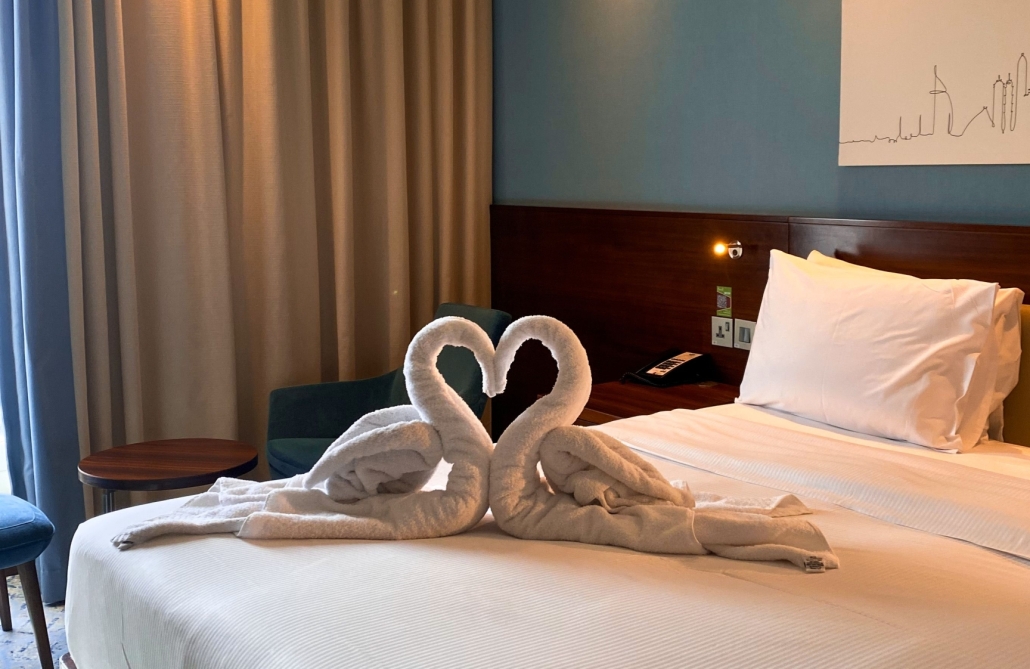
Hotels are unusually good at this. Think about all the little things that have almost nothing to do with renting a room for the night. The ridiculously heavy lobby doors. The smell when you walk inside. The lighting. The music playing somewhere that you can’t quite locate. The way the towels are folded. The glass your drink comes in at the bar.
Go to a really nice hotel and someone has thought about almost all of it.
Then think about how most companies approach marketing. We spend an incredible amount of time thinking about what we’re going to tell people. What’s the headline? What’s the slogan? What should the website say? What are we going to post on social media?
Those things matter, obviously. I make a living thinking about many of them. But I sometimes wonder whether we’re spending too much time trying to tell customers what kind of company we are and not enough time giving them little reasons to reach that conclusion themselves.
There’s a big difference between a business telling you it’s high-end and experiencing something that feels high-end.
This doesn’t necessarily mean spending a lot of money either. I’ve been to expensive restaurants where everything technically looked beautiful but something about the experience felt cold. I’ve also been to inexpensive little places where someone remembers your name, brings you something you didn’t order because they thought you’d like it, or packages something in a way that makes you smile when you open it.
Those things become part of the product even though they’re not technically the product.
Cities do this too, although they don’t usually think of it as marketing. A city can spend money developing a new logo and come up with a slogan about being a great place to live, work and play. Nearly every city seems to be a great place to live, work and play according to its own website.
But imagine arriving in that same city and finding beautiful landscaping, clean streets, interesting public art, comfortable benches, flowers, good lighting and storefronts that look cared for. You don’t need the slogan anymore. You’re already forming an opinion.
The opposite works just as quickly. You can have the greatest branding campaign in the world, but if the first thing someone sees after exiting the highway is weeds, faded signs and an abandoned shopping center, the weeds are probably going to win the branding argument.
That’s why I keep coming back to the bathrobe.
Every business probably has its own version of one. Some small, seemingly unnecessary detail that doesn’t appear in the main sales pitch but changes how the customer interprets everything around it.
Maybe it’s how you answer the phone. Maybe it’s what happens immediately after someone buys. It could be your packaging, your waiting room, the way an employee greets someone, or something so minor nobody in the company has thought about it in years.
I think it would be an interesting exercise for a business to forget about its logo and advertising for an afternoon and walk through the entire customer experience looking for those things.
What’s your bathrobe?
And perhaps more importantly, what’s the equivalent of a cheap scratchy towel that is quietly undoing everything your advertising promised?
Because customers probably aren’t separating all these things as neatly as we do.
To them, it’s all the hotel.
Contact us today at GRIPD.com to get started on your marketing strategy!